


Why choose Avenir Renovations?
Why install a VMI in French-speaking Switzerland
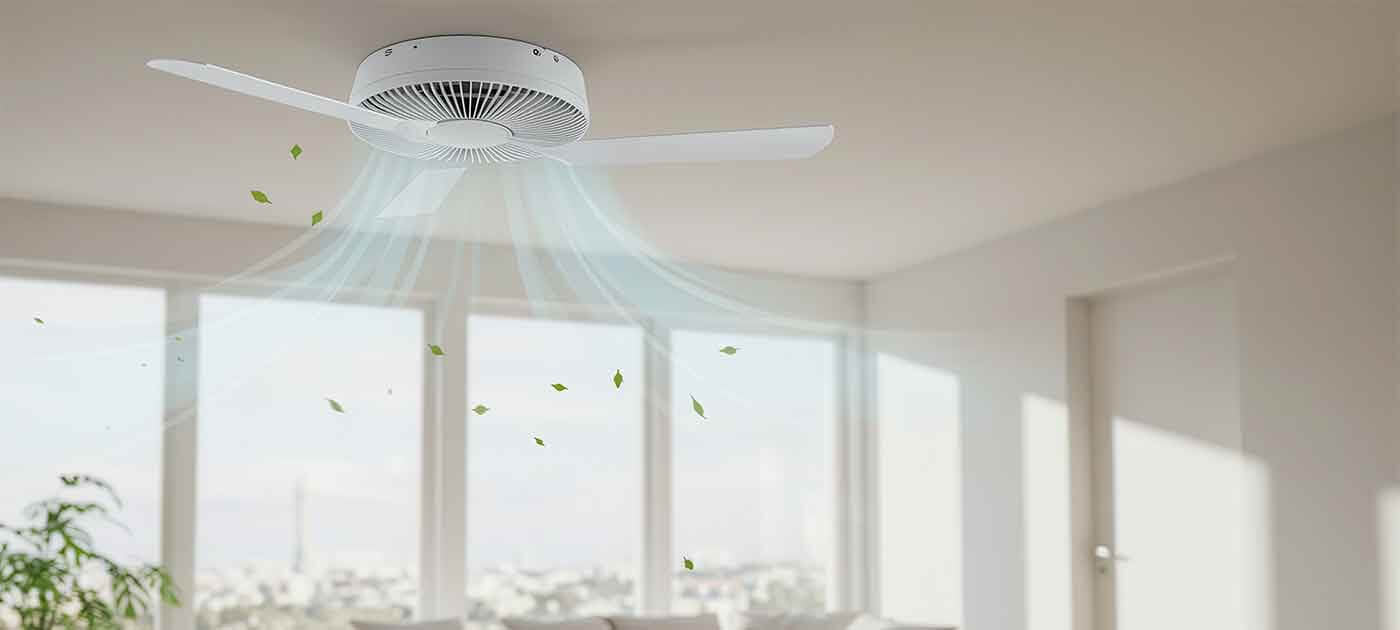
The VMI is distinguished by its reverse operation compared to traditional ventilation systems. It blows in fresh filtered and tempered air into your home, creating a slight positive pressure that pushes stale air outside through natural openings or existing extraction grilles.
Notable improvement in air quality
A VMI provides filtered air that reduces the presence of pollutants, dust, pollen, and allergens. This system is particularly effective in urban areas or near roadways where external pollution can affect your health.
Effective fight against humidity and mold
By blowing in dry and tempered air, the VMI helps lower the humidity level in your home. This helps limit condensation on walls and windows, thereby reducing the risk of mold development.
Optimized thermal comfort
Thanks to its preheating module, the VMI tempers the blown air to avoid cold sensations. In winter, this helps maintain a stable and pleasant indoor temperature, reducing the feeling of drafts.
Installation Steps for a VMI in French-speaking Switzerland
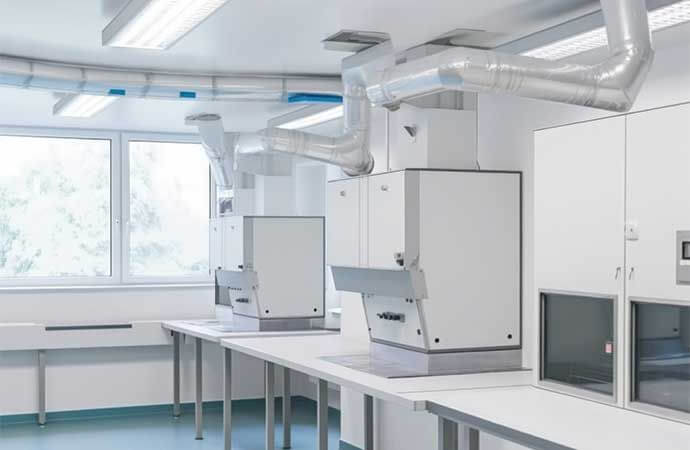
To ensure optimal operation, the installation of a Mechanical Ventilation by Insufflation (VMI) requires precise expertise and a rigorous methodology. At Avenir Rénovations Suisse, we apply a proven process that complies with Swiss standards to ensure the performance, durability, and energy efficiency of your system. Each step is designed to optimize indoor air quality while minimizing disturbances for the occupants.
The different types of VMI available
Each housing unit has specific needs, so there are several models and configurations of VMI to meet technical constraints and the expectations of occupants.
This system integrates an electric resistance that warms the outside air before blowing it into the housing. It is particularly suitable for individual houses and offers excellent thermal comfort, even in the middle of winter.
This model recovers heat from the indoor air to preheat the incoming air, thus reducing energy consumption. Ideal for well-insulated homes where energy efficiency is a priority.
Combining the advantages of supply and heat recovery, this system optimizes air quality while limiting thermal losses. It is suitable for high-end renovations and passive housing.
How much does it cost to install a VMI in French-speaking Switzerland
The price of a VMI installation varies depending on the chosen model, options, housing configuration, and necessary work to integrate the system.
| Type of service | Price per m² (CHF) | Average total price (CHF) |
| Standard VMI with electric resistance | 45 to 65 | 3,500 to 5,000 |
| VMI with thermodynamic exchanger | 65 to 90 | 4,500 to 6,500 |
| Hybrid double flow VMI | 80 to 120 | 6,000 to 9,000 |
| Replacement of an existing VMI | 35 to 55 | 2,500 to 4,000 |
| Complete annual maintenance | Flat rate | 150 to 300 |
These prices include the supply of the system, installation, electrical connections, adjustments, and tests. Specific work such as creating additional ducts or insulating conduits may incur additional costs.
Options and Additional Features
To further enhance the performance and comfort of your VMI system, various options can be integrated during installation or added later. These devices help optimize air quality, energy management, and ease of use on a daily basis.
High-Performance Filtration
Adding a fine particle filter (class F7 or higher) captures up to 90% of pollutants in the air, including dust, pollen, and allergenic particles. This solution is particularly recommended for individuals suffering from allergies, asthma, or living in highly polluted areas. By trapping harmful particles, it contributes to improving the health and respiratory comfort of occupants.
Humidity and CO₂ Sensor
This smart device automatically adjusts the airflow based on the humidity level and/or the concentration of carbon dioxide measured in the home. It helps maintain optimal air quality while reducing energy consumption when maximum ventilation is not needed. This system ensures a perfect balance between comfort, performance, and energy savings.
Remote Control
With a connected interface, it is possible to monitor and control your VMI from a smartphone, tablet, or computer. This feature is ideal for adjusting settings during your absence or adapting operation in real-time according to weather conditions. It offers additional user comfort and allows for better management of the system's energy consumption.
Regulations for Installing a VMI in French-speaking Switzerland
In French-speaking Switzerland, the installation of a mechanical ventilation system by insufflation is subject to certain technical and administrative rules aimed at ensuring safety, energy performance, and environmental compliance. Although VMI is less restrictive than other centralized ventilation systems, it must meet specific requirements.
Permits and Prior Declarations
In most municipalities, the installation of a VMI in an existing home does not require a building permit unless it involves visible exterior modifications (grilles, air outlets, facade openings). However, a prior declaration may be required in certain municipalities or condominiums.
Compliance with Swiss Ventilation Standards
The implementation of a VMI must comply with the requirements of the SIA 382/1 standard, which defines minimum airflow rates by room type, as well as acoustic and energy requirements. Adhering to these standards ensures sufficient air renewal without energy waste.
Requirements in Condominiums and PPE
For homes located in a condominium or property by floors (PPE), any modification that may impact common areas (facade, attics, technical shafts) must be approved by the assembly of co-owners. This step prevents disputes related to interventions on common elements.
Electrical Standards and Safety
The connection of the VMI must be carried out in accordance with the Ordinance on Low Voltage Electrical Installations (OIBT). It is imperative to entrust this operation to a licensed electrician to avoid any risk of non-compliance or electrical danger.
Specific Advantages of VMI in the Swiss Context
VMI has particular strengths that perfectly meet the needs and climatic constraints of the French-speaking part of Switzerland. Its effectiveness extends beyond improving indoor air quality to also optimizing energy use.
Adaptation to Cold and Humid Winters
Thanks to its integrated preheating system, VMI allows for the distribution of tempered air even in the middle of winter, reducing the feeling of cold and improving thermal comfort without excessive heating consumption.
Reduction of Heating Costs
By maintaining an incoming air temperature close to that of the living space, VMI limits thermal losses, which helps reduce energy bills in the long term.
Protection of the Building Envelope
Controlling indoor humidity helps preserve the structure and materials of your home. The risks of condensation and degradation are significantly reduced, thus extending the lifespan of coatings and insulation.
Maintenance and Lifespan of a VMI
Like any ventilation system, VMI requires regular maintenance to maintain its performance and longevity. Proper monitoring ensures consistent air quality and prevents malfunctions.
Regular Filter Replacement
Filters should be replaced every 6 to 12 months on average, depending on the external environment and frequency of use. Clogged filters reduce airflow and increase energy consumption.
Checking Settings and Cleaning Ducts
An annual inspection ensures that airflow and temperature are always in line with needs. Duct cleaning, although less frequent, is recommended every 3 to 5 years.
Average Lifespan
A well-maintained VMI system can operate between 15 and 20 years. Using quality components and following the manufacturer's recommendations further extends this lifespan.
FAQ on VMI Installation in the French-speaking Switzerland
Is a permit required to install a VMI?
In most cases, no permit is needed to install a VMI inside a dwelling. However, authorization may be required if work alters the external appearance or common areas.
Does the VMI consume a lot of electricity?
A standard VMI consumes on average between 20 and 50 watts, which is equivalent to using a powerful LED bulb. Models with a thermodynamic exchanger consume slightly more but remain energy-efficient.
Can a VMI be installed in an apartment?
Yes, but technical constraints may apply, particularly for duct passage and external connections. In a co-ownership, the agreement of other owners is essential.
Does the VMI replace a double-flow VMC?
No. The VMI operates on a different principle: it injects air instead of extracting it. It is often simpler to install and less expensive, but offers lower energy efficiency compared to a high-performance double-flow VMC.
What are the signs indicating that a VMI is necessary?
Condensation on windows, a persistent smell of dampness or mold, or recurring allergies may indicate a problem with air renewal, which the VMI can effectively address.
Optimize your air quality with Avenir Rénovations Suisse
In French-speaking Switzerland, where climate variations and building insulation can affect indoor air quality, VMI is a modern, effective, and accessible solution. It improves thermal comfort, reduces humidity, and limits pollutants in your home.
With Avenir Rénovations Suisse, you benefit from a precise technical diagnosis tailored to your home, installation by qualified and certified craftsmen, customized solutions with complete follow-up after installation, as well as a guarantee of compliance with current Swiss standards.
Our teams operate throughout French-speaking Switzerland: Geneva, Vaud, Neuchâtel, Fribourg, Valais, and Jura, to offer you a reliable, efficient, and durable installation.