

Why choose Avenir Renovations?
Why choose external thermal insulation
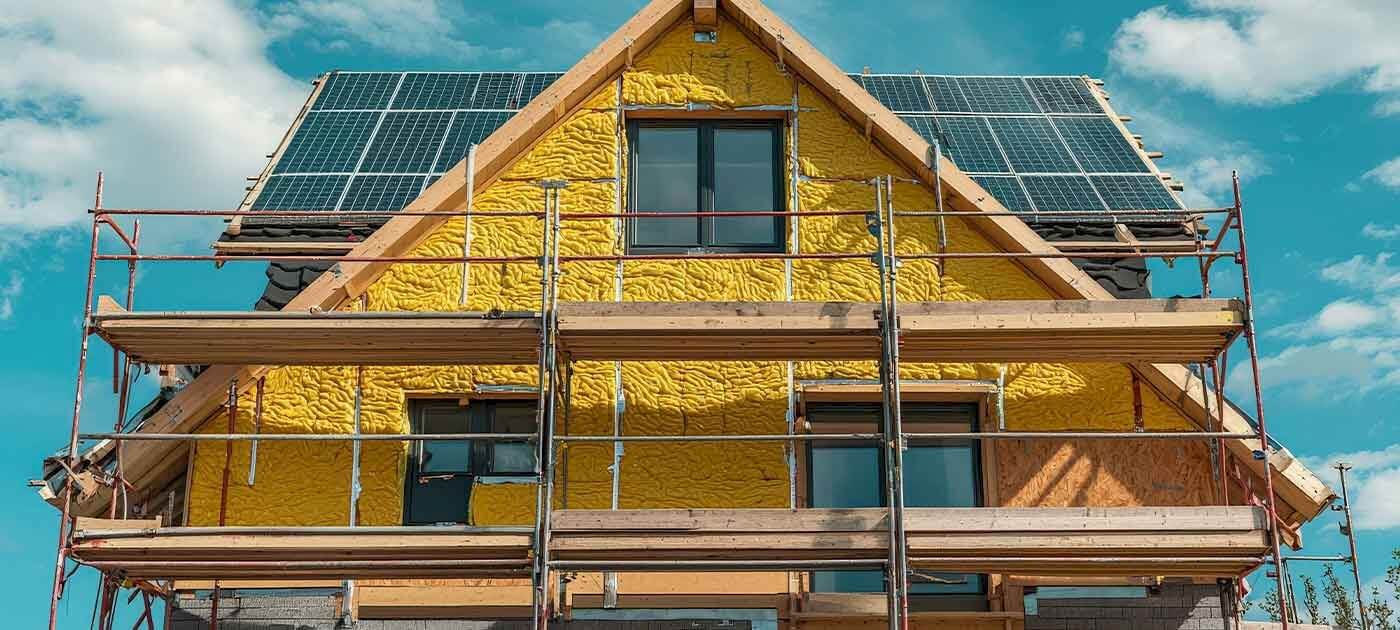
Choosing ITE offers a double advantage: strengthening the thermal envelope of the building and giving your facade a new appearance. This choice also provides concrete long-term benefits, both in terms of comfort and property value.
An efficient energy solution
ITE effectively eliminates thermal bridges by enveloping the building in a continuous insulating layer. This technique significantly reduces heat loss in winter and limits overheating in summer, ensuring optimal comfort year-round.
Increased comfort without loss of living space
Unlike interior insulation, ITE does not encroach on living space. The work is done outside, allowing you to continue using the rooms during the project and fully preserving the interior space.
Aesthetic enhancement of the facade
External insulation is an opportunity to give your facade a fresh look. With a wide choice of coatings, cladding, or finishes, your home gains in aesthetics and value on the real estate market.
Additional protection against the elements
By adding an insulating layer and a protective coating, ITE protects load-bearing walls against moisture, infiltration, and climate variations, thus extending the lifespan of the structure.
Steps of an external thermal insulation project in French-speaking Switzerland
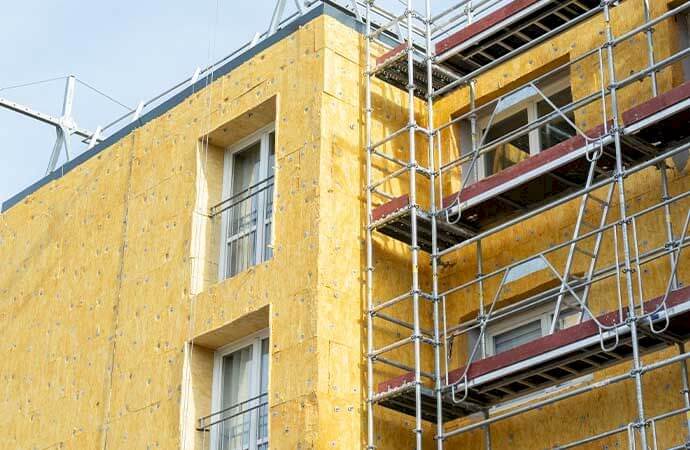
To ensure a high-performance and aesthetic result, each step of an ITE project must be carried out precisely by qualified professionals. Avenir Rénovations applies a rigorous process, from the initial study to the completion of the work.
Different types of external thermal insulation in the French-speaking part of Switzerland
Depending on your needs, budget, and the architectural style of your house, several ITE solutions are possible. Each method has its advantages, both aesthetically and in terms of energy performance.
This method involves attaching insulating panels to the facade, then covering them with a mesh and a finishing coat. It offers a smooth and modern aesthetic while ensuring excellent thermal protection and moisture resistance.
Here, the insulating panels are protected by a supporting structure covered with wooden, composite, PVC, or metal slats. This system guarantees very good ventilation of the walls and a personalized and durable architectural style.
Cladding combines insulation and covering directly fixed to the insulating panels. It is characterized by faster installation and a wide variety of materials, allowing for harmonious integration into different urban or rural environments.
Composite panels combine insulation and rigid cladding in a single element. They allow for quick installation, with a contemporary aesthetic finish and excellent long-term thermal performance.
How much does external thermal insulation cost in French-speaking Switzerland
The budget for an ITE project varies depending on the technique used, the type of insulation chosen, the surface to be insulated, and the complexity of the facades. Avenir Rénovations provides you with a detailed and transparent quote to avoid any surprises.
| Type of service | Price per m² (CHF) | Average total price for 100 m² (CHF) |
| ITE under plaster – expanded polystyrene | 140 to 180 | 14,000 to 18,000 |
| ITE under wood cladding | 190 to 250 | 19,000 to 25,000 |
| ITE under composite cladding | 200 to 260 | 20,000 to 26,000 |
| ITE rock wool – finishing plaster | 160 to 210 | 16,000 to 21,000 |
| ITE wood fiber – ventilated cladding | 210 to 280 | 21,000 to 28,000 |
| ITE composite panels | 220 to 300 | 22,000 to 30,000 |
These prices include the technical study, supply of insulating materials, installation, finishes, and site cleaning. They may vary depending on the configuration of your building and access constraints.
Insulating materials for effective ITE
The choice of insulation material is essential to optimize the thermal and acoustic performance of your home. It must also meet Swiss environmental and regulatory requirements.
Expanded polystyrene (EPS)
Lightweight, economical, and efficient, EPS is one of the most commonly used insulators for ITE. It offers an excellent quality/price ratio and good moisture resistance while facilitating implementation.
Rock wool
Ideal for its thermal and acoustic properties, rock wool is also fire-resistant and rodent-proof. Its density ensures very good thermal inertia, suitable for the climate variations in French-speaking Switzerland.
Wood fiber
An ecological and breathable material, wood fiber provides effective insulation in both summer and winter. It also helps regulate wall moisture and improve acoustic comfort.
Vacuum insulated panels (VIP)
These high-performance panels allow for maximum insulation with minimal thickness. They are particularly suitable for projects where external construction space is limited.
Regulations for External Thermal Insulation in French-speaking Switzerland
Before starting an ETI project, certain administrative steps are essential. Swiss regulations govern this type of work to ensure thermal, aesthetic, and environmental compliance.
Prior Municipal Authorization
Changing the exterior appearance of a building generally requires municipal authorization. The application must present the project, materials, and chosen color to comply with local urban planning regulations.
Respect for Property Boundaries
The thickness of the insulation must not encroach on neighboring property. A verification of cadastral plans and regulatory distances is necessary to avoid disputes with neighbors.
Compliance with Thermal Standards
The work must meet the requirements of standard SIA 380/1, which sets maximum thermal transmission values (U) for exterior walls. An energy performance certificate may be required.
Work in Protected Areas
If your house is located in a historic or protected area, additional restrictions may apply regarding materials and colors. Approval from heritage authorities will then be essential.
FAQ on External Thermal Insulation in French-speaking Switzerland
Is a building permit required for ETI?
Most municipalities require a permit or authorization for external thermal insulation. This is due to the visible modification of the facade, necessitating approval from authorities to comply with local urban planning rules.
What is the lifespan of an ETI?
A well-executed and maintained external thermal insulation can last from 30 to 50 years. Longevity depends on the materials used, the quality of installation, and exposure to climatic conditions and weather.
Can ETI be applied to a damaged facade?
It is possible to install ETI on a damaged facade, but structural damages must first be repaired. This preparation ensures the stability of the insulation and optimal adhesion for durable insulation.
Does ETI also improve acoustic insulation?
Yes, some insulating materials used in ETI, such as rock wool or wood fiber, provide excellent sound performance. They effectively reduce external noise disturbances for improved acoustic comfort.
Can ETI be combined with facade renovation?
ETI is often combined with facade renovation. This allows for modernizing the exterior appearance of the building while enhancing its thermal performance, offering a dual aesthetic and energy advantage.
Is ETI compatible with an old house?
External thermal insulation is perfectly suitable for old houses, provided that the walls are properly prepared. The choice of materials must respect the structure and manage moisture to avoid any damage.
Insulate your walls from the outside with Avenir Rénovations Suisse Romande
External thermal insulation is an effective and aesthetic solution to reduce your energy consumption, improve indoor comfort, and enhance the value of your property. In the Romandy region of Switzerland, Avenir Rénovations offers its expertise, qualified craftsmen, and personalized advice to ensure a successful, compliant, and sustainable project.
We operate throughout the Romandy territory: Geneva, Vaud, Neuchâtel, Fribourg, Valais, and Jura. Contact us today to obtain a detailed quote and discover how external thermal insulation can transform your home while preserving the environment.