


Why choose Avenir Renovations?
Why insulate your home in French-speaking Switzerland
Insulating a home is not just about installing insulating material. It is a comprehensive project aimed at improving thermal performance, limiting heat loss, and reducing environmental impact.
Reduction of heat loss
Effective insulation prevents heat produced by your heating system from escaping. This helps maintain a stable temperature, even in the middle of winter, while reducing energy consumption.
Improvement of indoor comfort
Good insulation regulates temperature and limits variations related to external weather conditions. It thus offers optimal thermal comfort in winter and summer, with fewer drafts and cold spots.
Decrease in energy bills
Reducing thermal losses results in a significant decrease in energy consumption. Less heating in winter and less air conditioning in summer lead to substantial savings each year.
Enhancement of your property value
A well-insulated home benefits from a better energy rating, which increases its value in the real estate market. This is a significant advantage when selling or renting.
Steps of an insulation project with Avenir Rénovations

Each insulation project in the Romandy region requires a methodical approach to ensure an optimal, durable result that complies with local standards.
The different types of insulation for your home
There are several insulation methods, each addressing specific needs based on the building's configuration, its condition, and your goals.
External thermal insulation involves wrapping the facade in an insulating coat. This solution significantly improves energy performance while renovating the building's exterior appearance, without reducing the interior living space.
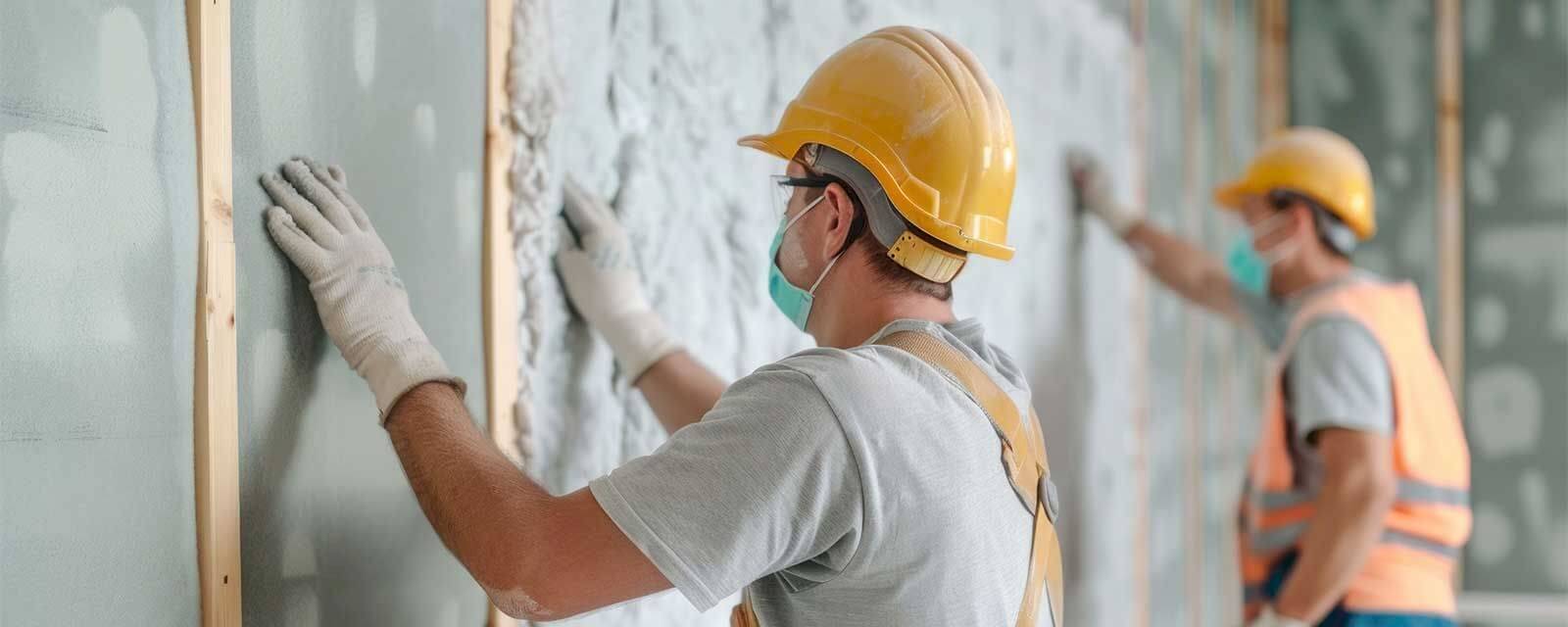
This method involves installing insulating panels or rolls on the interior walls. It is particularly suitable for interior renovations and helps limit work on the exterior facade.
Insulation of lost attics is done by blowing or rolling insulation onto the attic floor. It helps reduce heat loss through the roof, an area where a large portion of heat escapes.
In the case of converted attics, insulation is installed between the rafters or under the slopes. This preserves the living space while ensuring good thermal and acoustic protection.
Insulating ground floors involves placing insulation under the floor, above a crawl space or basement. This technique reduces the sensation of cold floors and minimizes heat loss from below.
How much do insulation works cost in the Romandy region
The cost of insulation depends on several factors: surface area to be insulated, technique used, choice of materials, and complexity of the site. The table below presents indicative estimates.
| Type of service | Price per m² (CHF) | Average total price (CHF) |
| External thermal insulation | 180 to 250 | 18,000 to 25,000 |
| Internal thermal insulation | 80 to 150 | 8,000 to 15,000 |
| Insulation of lost attics | 40 to 80 | 4,000 to 8,000 |
| Insulation of converted attics | 90 to 160 | 9,000 to 16,000 |
| Insulation of ground floors | 60 to 110 | 6,000 to 11,000 |
These prices include the supply of materials, installation, finishing, and quality control. A personalized quote is essential to obtain an accurate estimate based on your project.
The most commonly used insulating materials
The choice of insulation depends on many criteria: thermal performance, moisture resistance, ecological impact, and budget. Several families of materials are used in insulation work.
Glass wool
Glass wool is a high-performance and economical mineral insulation. It offers good thermal and acoustic resistance while being easy to install on various surfaces.
Rock wool
Rock wool is particularly resistant to fire and moisture. It is ideal for insulating walls, roofs, and floors that require enhanced protection against heat and noise.
Expanded polystyrene (EPS)
Lightweight and durable, expanded polystyrene is often used for external insulation. It offers an excellent performance-to-price ratio and adapts to many facade configurations.
Natural insulators
Natural insulators such as wood wool, hemp, or cellulose wadding are appealing for their low environmental impact. They ensure optimal thermal and hygrometric comfort while being health-friendly.
Options and finishes to enhance insulation effectiveness
In addition to the installation of insulation, certain options allow for further optimization of the energy performance and thermal comfort of your home.
Integrated vapor barrier
The vapor barrier prevents moisture migration through walls, thus avoiding condensation and mold. Its integration is essential in areas with high humidity or significant climatic variations.
Air sealing systems
A specific treatment of joints, carpentry, and connections limits unwanted air infiltration. This solution improves the overall efficiency of insulation and contributes to better indoor comfort.
Aesthetic finishes
Depending on the insulation method used, various decorative finishes can be applied, such as plaster, rendering, or cladding. These finishes enhance the protection of the insulation while beautifying the facade sustainably.
Why choose Avenir Rénovations for your insulation work
Entrusting your project to a professional is essential to ensure performance, durability, and compliance of the work.
Personalized support
We study your project in detail to propose an insulation solution perfectly adapted to your home, your technical constraints, and your budget. Each intervention is designed to combine energy efficiency and sustainable comfort.
Qualified craftsmen
Our professionals master the latest insulation techniques and comply with current Swiss standards. Their expertise guarantees careful execution, in accordance with the most demanding quality and safety standards.
Quality materials
We use high-performance, durable, and environmentally friendly insulators. Their selection aims to improve the energy efficiency of your home while contributing to your thermal and acoustic comfort on a daily basis.
Quick and careful intervention
Our construction sites are organized methodically to meet the announced deadlines. We strive to limit disturbances, protect living spaces, and deliver a clean, reliable, and durable result.
Regulations for insulation in French-speaking Switzerland
Insulation work in Switzerland is governed by standards and regulations aimed at ensuring energy performance and the safety of buildings.
Municipal permits
Some renovation work, particularly external insulation, requires a municipal permit. Administrative procedures vary by canton and municipality, so it is essential to inquire in advance to avoid delays or penalties.
Compliance with energy standards
Renovations must comply with current Swiss standards, such as the SIA 380/1 standard, which imposes strict requirements for energy efficiency. These standards ensure optimal performance and may condition the receipt of subsidies.
Work in co-ownership
When it comes to common areas, such as facades, the agreement of the co-ownership in a general assembly is essential. Anticipating this validation helps avoid blockages and allows for planning the work in full compliance.
Environmental standards
Construction sites must limit their ecological impact by using sustainable materials and adhering to Swiss waste sorting and management rules. This is part of a responsible and sustainable construction approach.
FAQ on residential insulation in French-speaking Switzerland
Is it always necessary to insulate from the outside for good performance?
No, internal insulation can also offer excellent thermal performance, especially during interior renovations. However, it is less effective for addressing thermal bridges and may slightly reduce the living space.
Can you insulate an occupied home?
Yes, it is possible to insulate an occupied home, but some work may require a temporary reorganization of spaces to allow for effective intervention and ensure the quality of work execution.
What are the most eco-friendly insulating materials?
Wood wool, hemp, and cellulose wadding are natural and eco-friendly insulators. They provide good thermal performance while being made from renewable or recycled resources.
How long do insulation works take?
The duration depends on the chosen method and the area to be treated. Internal insulation generally takes a few days, while external insulation can last several weeks depending on the complexity of the site.
Does insulation also improve acoustic comfort?
Yes, many thermal insulators also have good acoustic properties. They help reduce external noise and improve sound comfort inside the home.
Thermal and acoustic insulation: Avenir Rénovations Switzerland supports you
Investing in effective insulation is one of the most efficient ways to improve comfort, reduce energy expenses, and enhance your property value. In French-speaking Switzerland, climatic and regulatory conditions require suitable and sustainable solutions. Avenir Rénovations supports you from study to execution, guaranteeing work that complies with standards, carried out with care and respect for deadlines.
We operate throughout French-speaking Switzerland, including Geneva, Lausanne, Fribourg, Neuchâtel, Sion, and Yverdon-les-Bains, for all your insulation projects.