



Why choose Avenir Renovations?
Why insulate your walls from the inside
Improving the interior of your home offers numerous advantages, both in terms of energy efficiency and daily comfort. This solution is particularly suitable when external insulation is not possible or desired.
Reduction of heat loss
By limiting thermal exchanges between the inside and outside, ITI can reduce heat loss in a home by up to 25%. This results in a more stable indoor temperature and lower energy bills.
Enhanced thermal comfort
A well-designed interior insulation eliminates the sensation of cold walls and improves the even distribution of heat. This translates to better comfort felt, both in winter and summer, in all rooms of the house.
Economic and quick solution to implement
ITI requires less heavy equipment and can be completed more quickly than external insulation. It is an ideal solution for quick renovations or controlled budgets, while offering an excellent cost/performance ratio.
Steps of a thermal insulation project from the inside in Switzerland

The success of an interior thermal insulation project relies on a rigorous methodology and professional expertise. Each step must be carefully planned and executed.
The different types of interior thermal insulation
Interior thermal insulation can be carried out with different materials and techniques, depending on the configuration of the home, the expected performance, and the available budget.
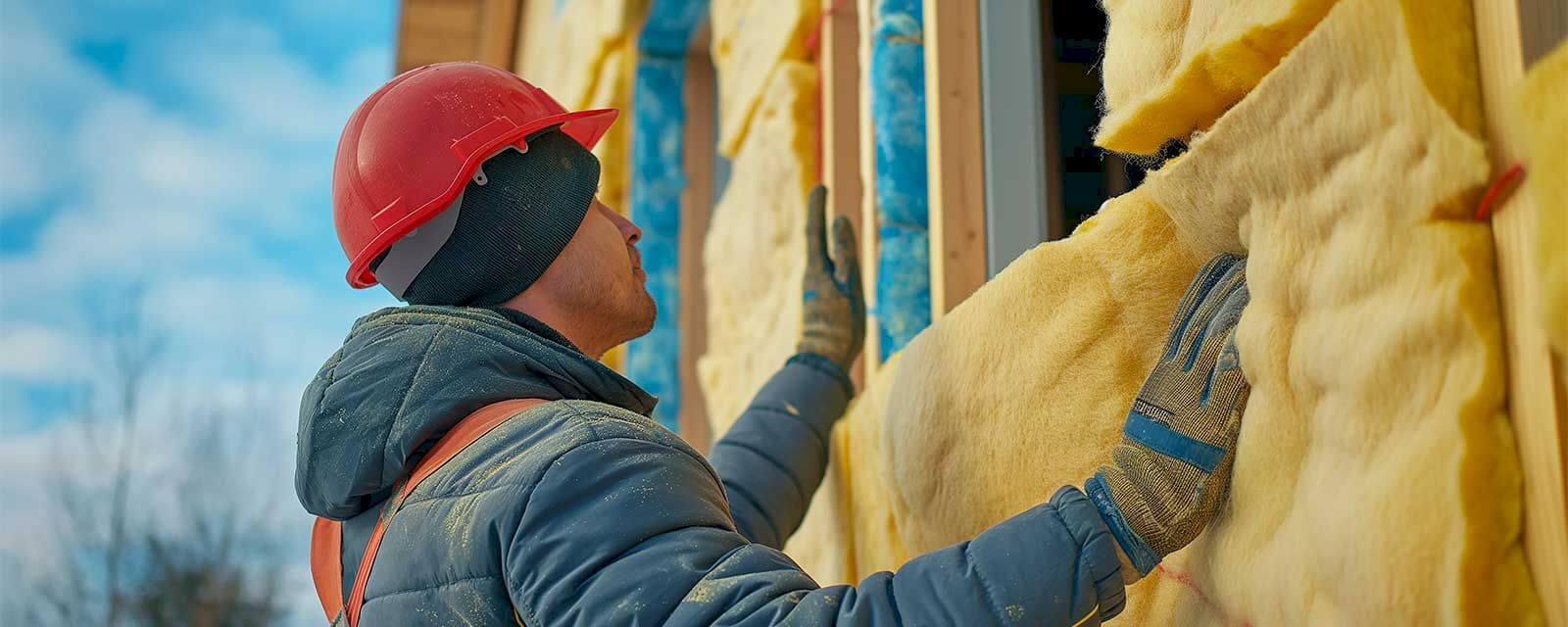
This method involves fixing a metal framework onto which panels or rolls of mineral wool are inserted, before being covered with a plasterboard. It offers excellent thermal and acoustic performance.
The glued lining is a panel made up of an insulating material and a plasterboard directly glued to the wall. This technique is quick to implement and particularly suitable for regular and well-maintained walls.
This solution involves erecting a new masonry partition in front of the existing wall, with insulation sandwiched in between. It guarantees great robustness, good thermal inertia, and excellent soundproofing.
How much do interior thermal works cost in Switzerland
The price of interior thermal works depends on the type of insulation, the technique used, the surface to be insulated, and any finishing touches. The table below provides an average estimate to help you anticipate your budget.
| Type of service | Price per m² (CHF) | Average total price for 100 m² (CHF) |
| ITI with metal framework + mineral wool | 80 to 120 | 8,000 to 12,000 |
| ITI with glued lining | 70 to 110 | 7,000 to 11,000 |
| ITI with masonry counter-partition | 100 to 150 | 10,000 to 15,000 |
| with high-density rock wool | 90 to 130 | 9,000 to 13,000 |
| with bio-based materials | 110 to 160 | 11,000 to 16,000 |
These prices include technical study, supply of materials, labor, and basic finishes. A personalized quote is essential to know the exact cost of your project based on its specifics.
Which insulators to choose for ITI in Switzerland
The choice of insulating materials is essential to ensure the durability and effectiveness of the interior insulation. It depends on the desired performance, the constraints of the building, and the budget.
Glass wool
Glass wool is a commonly used insulator for ITI due to its low cost and good thermal and acoustic performance. It is lightweight, easy to install, and non-flammable.
Rock wool
Denser than glass wool, rock wool offers excellent acoustic performance and high fire resistance. It is particularly recommended for buildings requiring enhanced insulation.
Bio-based insulators
Insulators made from wood fiber, hemp, or cellulose wadding are appealing due to their low environmental impact and ability to regulate humidity. They are suitable for ecological renovations and timber-framed houses.
Options and finishes for a custom ITI
The interior fit-out can be complemented by various options to enhance its performance or appearance.
Integrated vapor barrier
The vapor barrier limits the risk of condensation and protects the insulation from moisture. It is particularly recommended in rooms with high humidity, such as bathrooms and kitchens.
High-density boards
High-density plasterboards reinforce the structure of the partitions, allowing them to support significant loads such as wall-mounted furniture. They also improve acoustic performance compared to standard boards, offering superior acoustic comfort.
Integration of technical ducts
The interior fit-out allows for the direct integration of electrical ducts, ventilation conduits, or plumbing. This solution simplifies renovations while ensuring a clean finish, with no visible networks on the walls.
Regulations for thermal interior fit-out in Switzerland
In Switzerland, interior renovation work must comply with certain standards and legal obligations. These vary slightly depending on the canton and the type of building, but several points are common.
Work authorization
In most cases, the interior fit-out does not alter the exterior appearance of the facade and therefore does not require a building permit. However, in co-ownership or in a listed building, prior authorization may be required.
Compliance with thermal standards
The works must meet the requirements of the SIA 380/1 standard, which defines the minimum thermal resistance values to be achieved for opaque walls. These values ensure optimal and sustainable energy performance.
Moisture treatment
The ITI must incorporate devices that limit the risk of condensation, especially in damp rooms. Maintaining the continuity of the vapor barrier is essential to prevent any subsequent degradation.
Works in co-ownership
If you live in an apartment building, the interior fit-out of your home must comply with the technical and aesthetic constraints set by the co-ownership regulations. Certain decisions require a vote at the general assembly.
FAQ on thermal interior fit-out in Switzerland
Is a building permit required for an ITI in Switzerland?
As a general rule, the interior fit-out does not require a building permit as it does not affect the exterior appearance of the building. However, authorization may be necessary in co-ownership or in a protected building.
What is the lifespan of an interior fit-out?
A well-executed and properly maintained ITI can last between 30 and 50 years. The quality of materials, proper implementation, and protection against moisture are crucial for ensuring this longevity.
Can an ITI be combined with other renovation work?
Yes, it is common to couple the ITI with window replacement, electrical renovation, or refreshing paint. This allows for cost optimization and reduces the overall duration of the project.
Does the ITI reduce the living space?
The installation of insulation and an interior finish slightly reduces the living space, generally by 5 to 7 cm per insulated wall. This compromise is largely offset by the gain in comfort and energy savings.
What is the best time to carry out an ITI?
Works can be carried out year-round, but it is preferable to plan the ITI during periods of overall renovation or before winter to immediately benefit from energy savings.
Does the interior fit-out also improve acoustics?
Yes, most insulations used for the ITI, such as mineral wool or rock wool, offer excellent acoustic performance. This helps reduce external noise disturbances and improve indoor comfort.
The interior of the walls by Avenir Renovations Switzerland
Interior thermal insulation is an efficient, economical, and quick solution to improve comfort and reduce energy expenses in your home in Switzerland. Avenir Renovations supports you at every stage, from the thermal study to the finishing touches, ensuring meticulous work that complies with current standards.
Whether you are in Geneva, Lausanne, Neuchâtel, Fribourg, Sion, or Delémont, our local teams respond quickly to offer you tailored solutions that fit your budget and expectations. Contact us today to get a personalized quote and give new comfort to your home while achieving sustainable energy savings.